Lechon, lechon belly and lechon kawali — what's the difference?
Three dishes, three different things, one word in common. Here they are side by side.
Side by side
| Whole lechon | Lechon belly | Lechon kawali | |
|---|---|---|---|
| What it is | A whole pig | A rolled belly cut | Belly cut into pieces |
| How it is cooked | Roasted whole on a spit | Rolled, stuffed, roasted | Boiled, then deep-fried |
| Feeds | 10–50, by size | A table | One or two |
| Carved at | The table | The table | The kitchen |
| The occasion | The centrepiece | A main dish | A meal |
Whole lechon
One pig, roasted whole on a spit over hours. It is the centrepiece — the thing people stand around and photograph before anyone eats. This is what we make. Cebu style, which means the seasoning goes inside the pig rather than into a sauce afterwards.
Lechon belly
The pork belly rolled, stuffed and roasted. Easier to serve, feeds a table rather than a room, and you can buy it by the kilo. Different thing, different occasion — and it will not do the job of a centrepiece at a handaan.
Lechon kawali
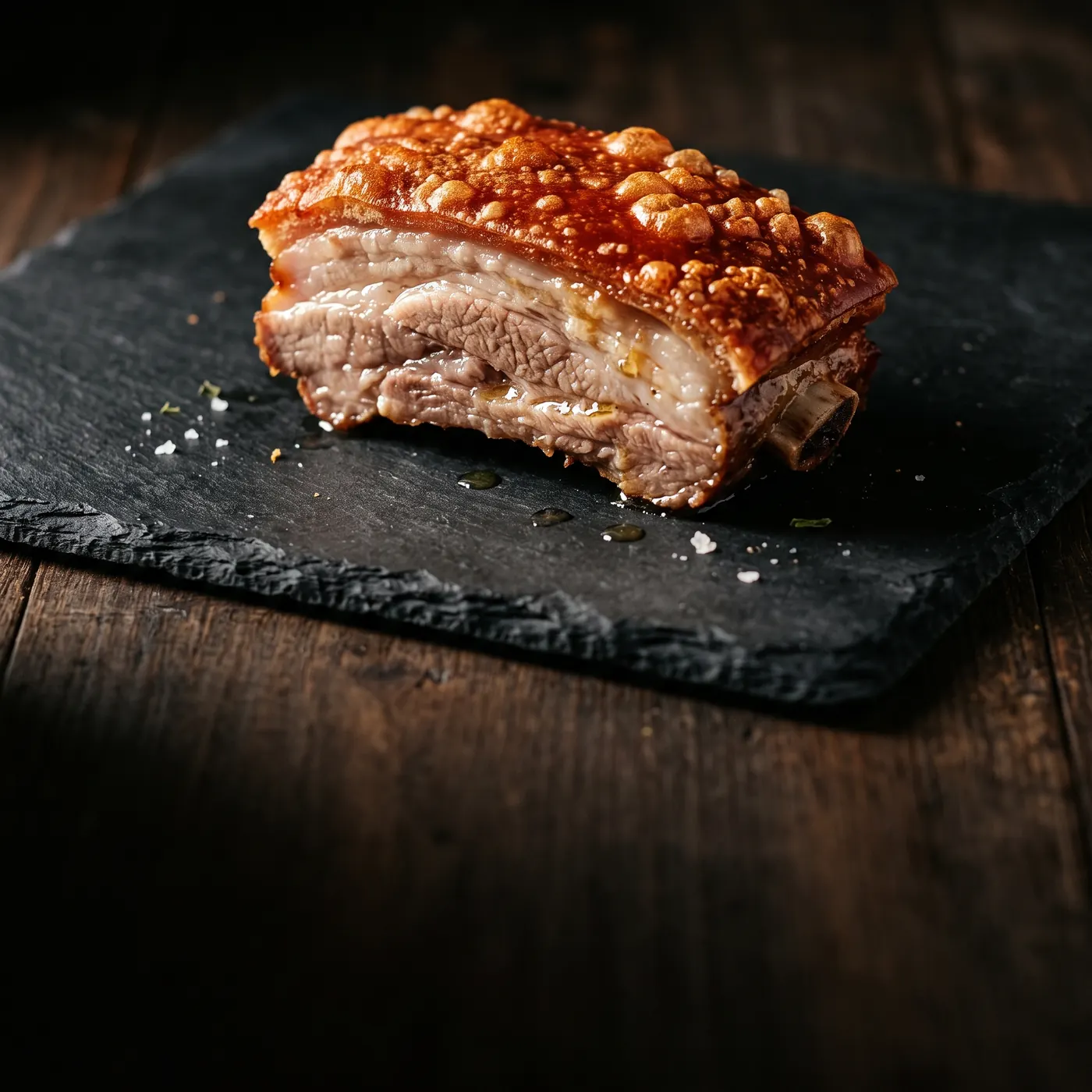
Not roasted at all. Belly is boiled, dried, then deep-fried in a wok until the skin blisters. It is a dish, not an event.
So which do you want?
If you are feeding 10 or more and the food is part of the occasion, it is a whole lechon. If you are feeding a table, belly. If you are cooking dinner, kawali.
We only do the first. If you want the other two, we are not the people to call — and we would rather say so than sell you the wrong thing.